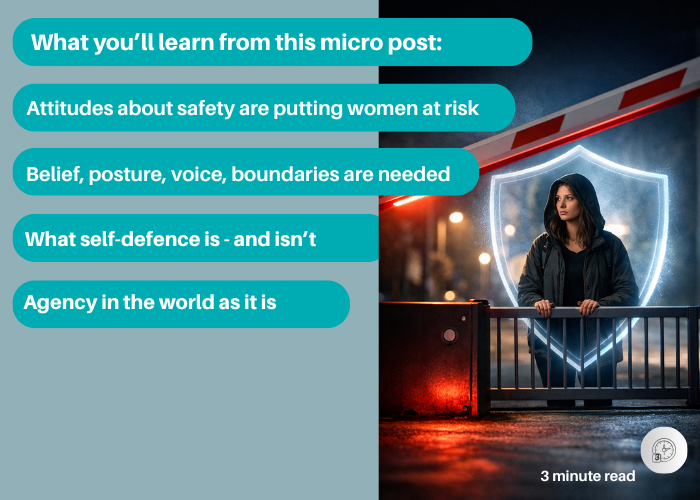
#jointhediscussion – listen to this short clip from LBC radio below
Founder of Mu-shin and the WarriorUp programme, Stuart Kirby, spoke with LBC presenter Nick Ferrari about rising violence against girls and women.
It was a respectful exchange. It was also a familiar one.
Stu talking to Nick Ferrari
The presenter’s concern was clear and understandable:
“Isn’t teaching self-defence essentially admitting we can’t stop the crime — and asking women to take responsibility for men’s behaviour?”
On the surface, that argument sounds morally correct.
But in practice, it closes down one of the few immediate, proactive tools we have to restore women’s power right now.
The Uncomfortable Truth
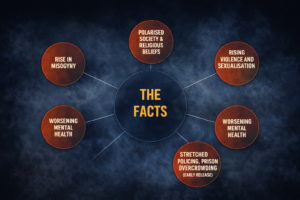
We are in what Stuart described as a perfect storm:
- Rise in misogyny
- Polarised society and religious beliefs
- rising violence and sexualisation
- worsening mental health
- stretched policing, prison overcrowding (early release)
- slow-moving systemic change
We should absolutely demand better laws, better enforcement, and cultural change.
Saying “women shouldn’t have to learn self-defence” may be true in principle — but it doesn’t help the girl walking home today, the teenager on public transport, or the woman sensing something isn’t right.
But while we wait for systems to catch up, women and girls are still navigating the world as it is — not as we wish it to be.
The World as It Is
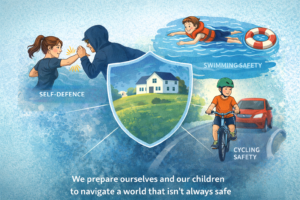
Most of us didn’t enjoy getting vaccinated during COVID or wearing masks, but we also couldn’t know whether, if we caught it, we’d have a mild, typical, or severe reaction. So we chose to act on the side of caution. It’s the same with other skills we accept as normal. We learn to swim not just for fun, but also to stay safer if we ever end up in deep or dangerous water.
We teach children to cycle safely, not because we expect them to crash, but because we know there are careless drivers on the road. Self-defence is no different. It’s not about accepting violence or blaming victims; it’s about giving people the skills to protect the most valuable asset they have – themselves – as they move through a world that isn’t yet as safe or fair as it should be.
What Self-defence Actually Is (and Isn’t)
This is where the conversation often goes wrong.
Self-defence is not just about teaching girls to fight men.
It’s not just about “knocking someone down.”
And it certainly isn’t about excusing violent behaviour.
As Stuart explained — drawing on 43 years of martial arts experience and training in Japan — good self-defence:
- builds calm under pressure
- strengthens posture and presence
- teaches boundary-setting and voice
- restores a sense of agency
- If taught correctly, can offer a physical fallback option
In his words:
“If your voice is powerful and your stance is powerful, maybe 90% of the time that’s all it takes to shut it down.”
“Physical capability builds confident verbal assertiveness and a sense of self-assurance you carry into every area of your life” – This inner strength, in the hands of a young woman experiencing her first tense argument in a relationship, would keep her boundary strong, making it less likely to spiral into a domestic abuse cycle.
That’s not fear-based training –that’s confidence, awareness, and nervous system regulation.
But be wary of snake-oil salesmen and so‑called “Bullshido” – flashy systems that look great on camera or in movies but fall apart in real life. They often waste valuable training time on techniques that are unrealistic, hard to remember, or simply don’t work under pressure, while giving people a dangerous sense of confidence.
This is exactly why we need an honest, evidence-based conversation about how to teach self-defence: methods that are simple, effective, and can be used instinctively when someone is scared, adrenalised, and under extreme stress.
The Part We’re Not Allowed to Say Out Loud
When we shut down conversations about self-defence in the name of principle, we unintentionally:
- deny women tools that increase confidence
- frame empowerment as “victim blaming”
- leave girls waiting for protection that may not arrive
We can hold two truths at once:
- Violence against women is never acceptable and must be addressed systemically
- Women deserve skills that help them feel capable, calm, and in control in the meantime
- Empowerment is not the same as responsibility.
- Preparation is not the same as blame.
- And restoring women’s sense of power — mentally, emotionally, physically — should never be controversial.
Capability can be felt – not just talked about. Try our 3-minute challenge and experience how simple movement, posture, and intent can shift how you feel in your body.
Start here – it’s free, and with a tiny investment of time, you really have nothing to lose and everything to gain for 2026 and beyond.