
Before Christmas, the Home Secretary described violence against women and girls as a “national emergency”, stating what victims, families and frontline workers have known for years.
A System That Fails — By Design
Emergencies demand immediate, population-level action — not strategies that take the better part of a decade to fully implement.
The government’s latest proposals, such as specialist rape investigation teams, expanded protection orders, and undercover online policing are necessary to improve consistency and accountability. But they all share the same limitation: they act after harm has already occurred.
If violence against women were spreading like a virus, we would not rely solely on law enforcement and prosecution.
We would focus relentlessly on prevention and preparedness - like a vaccination.
The Obvious Truth
Shabana Mahmood’s admission that the criminal justice system “fails women” is refreshingly honest. But it is also deeply concerning.
Women already know:
- Reporting sexual violence is traumatic and slow
- Conviction rates remain low
- Investigations vary wildly by postcode
- Protection often arrives after life-altering damage has been done
Policing matters. Legal reform matters. But none of this prevents the initial attack.
And that is the moment we continue to ignore.
The Question No One Is Asking

An article published just before Christmas documented a familiar and disturbing incident occurring back in August 2025. A woman was approached late at night in a dark alleyway. She was struck from behind. She was raped.
The details change. The outcome does not.
Here is the uncomfortable truth:
People can protect against this.
The first rule of self-defence is space.
The second is not placing oneself in avoidable vulnerability.
This is not victim-blaming. It is reality-based safety education — the same principle used in every other area of risk management, from road safety to fire prevention.
We teach children how to cross roads.
We teach people how to evacuate buildings.
We teach cyber awareness to protect against fraud.
So why are we not teaching:
- Situational awareness
- Boundary setting and verbal deterrence
- How predators select targets
- How confidence disrupts criminal intent
- When to disengage, escape or escalate
Why is this not embedded in schools, workplaces and communities?
Protection Without Preparation Is Not Protection
The current strategy invests heavily in enforcement of:
- Targeting repeat offenders
- Digital surveillance
- Protection orders
All essential. All reactive.
What it does not address is human readiness.
Predators rely on:
- Hesitation
- Compliance
- Fear
- Isolation
Preparedness disrupts all four.
Confidence changes posture.
Awareness changes decisions.
Capability changes outcomes.
If This Is a Pandemic, Let’s Treat It Like One
Violence against women is escalating at a scale that mirrors a public-health crisis. Yet our response remains fragmented and slow.
Preparedness should not be optional. It should be nationally prioritised, widely accessible and culturally normalised.
That means:
- Teaching practical safety skills in schools
- Normalising de-escalation and assertiveness training
- Giving women tools to recognise danger earlier
- Reframing self-defence as prevention, not combat
This is not about teaching people to fight.
It is about teaching people to avoid becoming targets — and to act decisively if avoidance fails.
From Reaction to Readiness
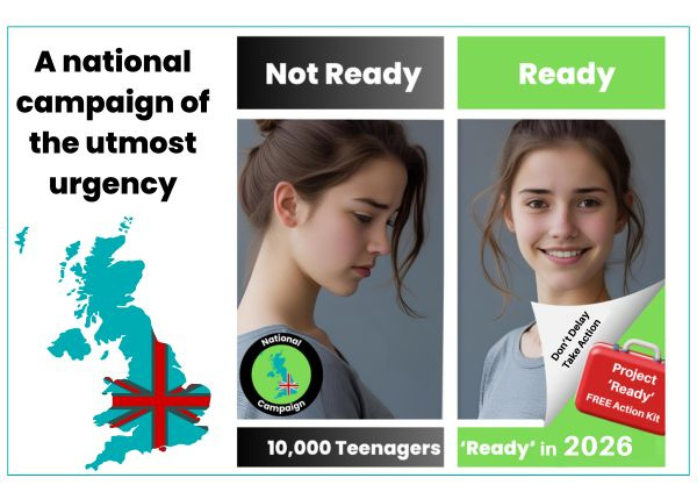
At Mu-shin Self-Defence, our Project Ready and #MeNow initiatives were created in response to exactly this gap.
Our work focuses on:
- Pre-incident awareness
- Verbal and behavioural deterrence
- Simple, instinctive responses under stress
- Mental, physical and situational capability
These are skills grounded in neuroscience, behavioural science and decades of real-world self-defence — not theory, and not performative training.
Prepared people do not freeze as easily.
They spot risk earlier.
They carry themselves differently.
And that alone can change a narrative.
A Call for Partnership, Not Politics
This is not a rejection of government action. It is a call to complete the picture.
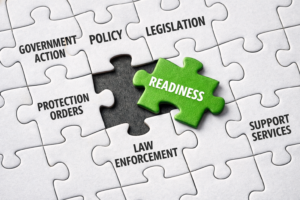
If policymakers are serious about halving violence against women, then prevention must extend beyond policing and punishment.
We are calling for:
- Preparedness programmes in schools
- Capability training alongside safeguarding policies
- Partnerships with police and crime commissioners
- Recognition that confidence and competence are protective factors
Women do not want to live cautiously.
They want to live confidently.
If violence against women is a national emergency, then getting people ready is not radical.
It is responsible.
It is preventative.
And it is long overdue.
#ProjectReady#MeNow#PreparedNotScared#CapabilityIsProtection